Trellis or Obelisk? Choosing Support Around the Plant
Understand the difference between a flat climbing surface and a freestanding support before choosing a product.
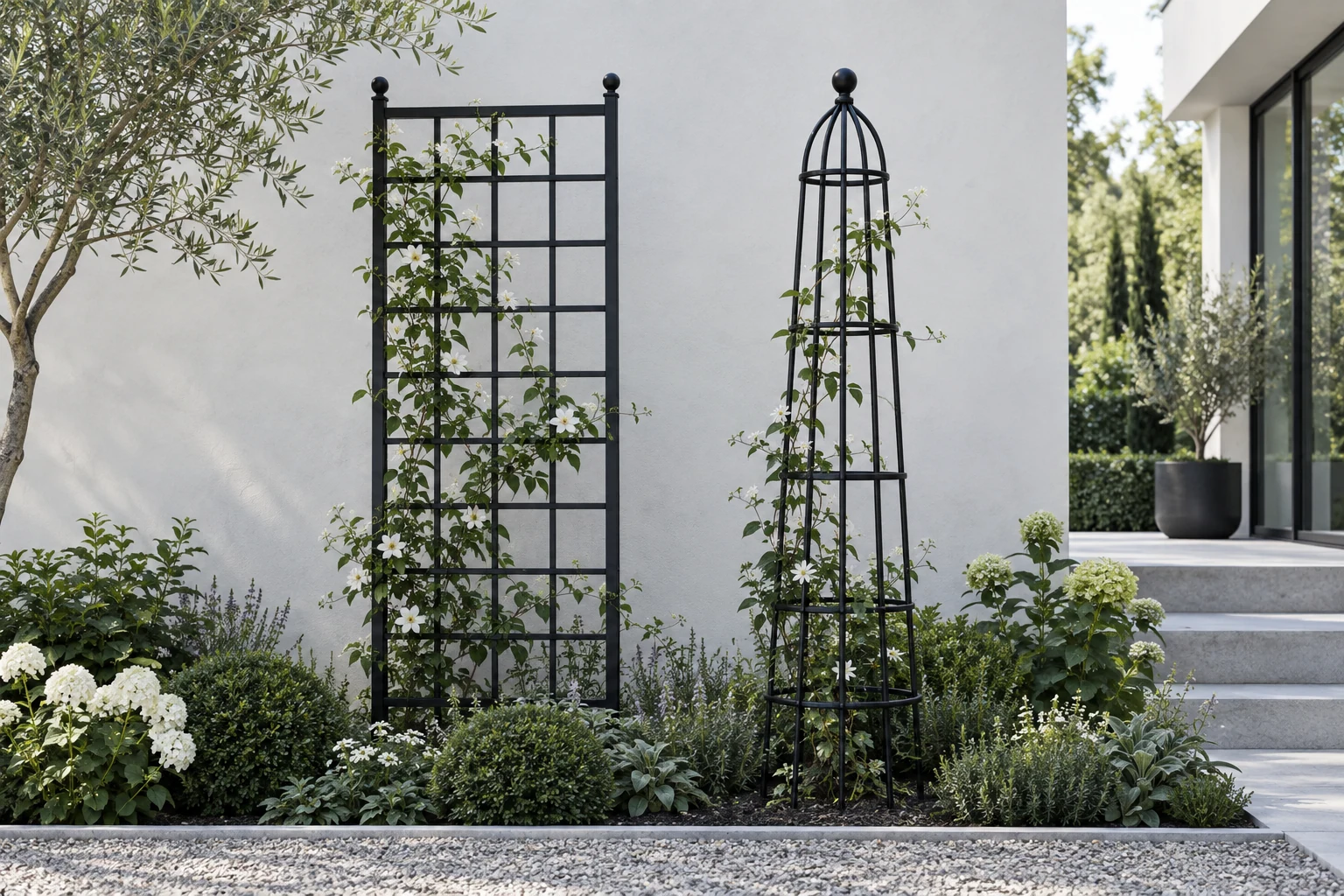
Plant supports work best when selected for the plant and the space together. A flat trellis can define a climbing plane, while an obelisk creates a freestanding vertical form. Neither shape is automatically suitable for every climber. Start with the plant's mature habit and the product's intended installation.
Understand how the plant climbs
Some plants twine, some use tendrils and others need training or tying. Check plant-specific advice before choosing the spacing and form of a support. University of Minnesota Extension describes trellises and cages as useful supports for vegetable gardens and notes that certain fruiting crops need additional support for their fruit.
Choose a plane or a volume
Use a flat structure when you want growth along a boundary or a defined line. Consider a freestanding form when the plant will be viewed from several sides. Leave access for watering, pruning and harvest rather than placing the support solely for the best initial photograph.
Check the installed dimensions
Measure the planting area and confirm whether the product size includes ground stakes. For a container, verify the available opening and the installation guidance. A pot shown in a scene may be a prop and may not be supplied or suitable for every size.
Avoid overloading a decorative support
Ask the supplier about intended use and verified limits. Account for the mature plant and follow anchoring instructions. Do not use a light ornamental frame as a substitute for a structure designed for substantial loads. Local plant advice and product guidance answer different parts of this decision.
Explain the distinction at retail
Show the bare structure as well as a planted example. Label the included quantity and separate style choices from dimensions. A clear description of shape and installation is more useful than promising that a support will work for all climbing plants.
Sources & further reading
Sources checked September 20, 2026. Requirements may change; consult current official guidance.