
Before You Buy a Raised Garden Bed: A Planning Guide
Plan placement, reach, soil volume and drainage before selecting a raised bed for your garden.
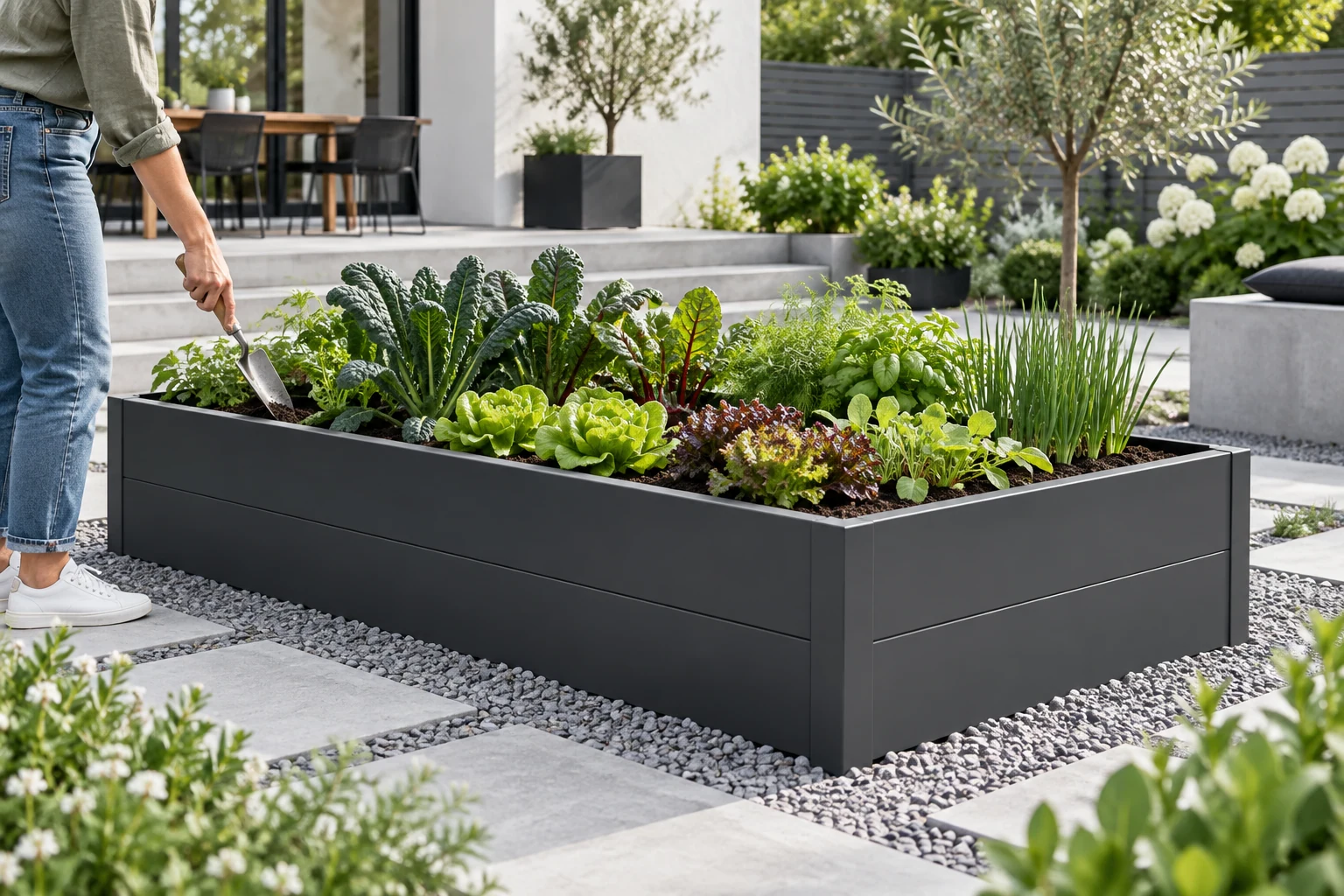
A raised bed is part of a growing system, not just a border around soil. Its placement, dimensions and relationship to the ground affect how it will be filled and maintained. University of Minnesota Extension recommends considering access to water and the light required by the plants when choosing a site.
Identify the type of bed
Distinguish an open-bottom raised bed from an elevated planter with a base. Confirm whether a liner or bottom is included. These products interact differently with the supporting surface, so do not assume that a scene on a patio proves suitability for every paved or elevated location.
Plan access before maximizing size
Measure the space around the bed and consider whether you can reach the center without stepping into it. Leave room for maintenance and the tools you use. Check gates and delivery access as well as the final footprint; assembled dimensions do not describe the shipping carton.
Estimate fill volume carefully
For a simple rectangular interior, volume in cubic feet is interior length in feet multiplied by interior width in feet multiplied by planned fill depth in feet. For example, 4 ft by 2 ft by 1 ft requires approximately 8 cubic feet before allowing for the actual shape or settling. This is a calculation example, not a product specification.
Check the site and growing medium
Plan drainage and water access with the installation guidance and local gardening advice. For food gardening, University of Maryland Extension recommends considering soil testing for lead. Do not label a material food-safe solely because it appears in a garden catalog; obtain appropriate product information for the intended use.
Prepare the customer information
Retailers should distinguish overall dimensions from growing space, and state which base, liner or accessories are included. Avoid showing soil and plants as though they arrive with the product. Provide assembly and care instructions that match the exact variant being sold.
Sources & further reading
- University of Minnesota Extension: Raised bed gardens
- University of Maryland Extension: Growing vegetables in raised beds
Sources checked September 20, 2026. Requirements may change; consult current official guidance.